
HOA vs No HOA in Telferner: How to Choose Wisely
December 4, 2025
December 4, 2025
Thinking about buying in Telferner and not sure if an HOA fits your lifestyle? You are not alone. Many Victoria County buyers weigh the tradeoff between predictable neighborhood standards and the freedom that comes with rural or non‑HOA living. In this guide, you will learn how HOAs work in Texas, what no‑HOA ownership really involves around Telferner, and the practical steps to compare costs, rules, and responsibilities before you make an offer. Let’s dive in.
If you want consistent curb appeal and shared maintenance, an HOA community can deliver structure. If you prefer space for outbuildings, livestock, or more flexible use, a non‑HOA or rural parcel can be a better fit. Around Telferner, you will find both small subdivisions with recorded covenants and rural acreage where you manage more on your own. The right choice depends on how you plan to live, what you want to build, and what ongoing costs you are comfortable carrying.
In Texas, most HOAs are nonprofit associations created by recorded covenants, conditions, and restrictions. They collect dues, maintain common areas, and enforce community rules. State law also sets some procedural standards, including homeowner notice and records access, through the Texas Property Code. You should review both the recorded documents and recent budgets before you write an offer.
Most HOAs in the region use an Architectural Control Committee. You typically submit plans for exterior changes, fences, paint colors, sheds, barns, or garages. Timelines and requirements are spelled out in the governing documents. Ask for current guidelines, application forms, and examples of recent approvals and denials to see how strict the standards are in practice.
HOAs commonly set standards for exterior materials and colors. They may restrict fence height and type, where you can park RVs or boats, and how often you must mow. Some limit livestock, commercial vehicles, short‑term rentals, and business signage. Rules vary, so read the CC&Rs and any rules and regulations carefully.
HOA budgets are funded by regular assessments, reserve contributions for long‑term repairs, and occasional special assessments. Many associations also charge transfer or estoppel fees at closing, and fines for violations or late payments. Under Texas law, associations can place liens and may pursue foreclosure for unpaid dues, subject to proper procedures. Always ask for current financials and whether any special assessments are pending or recently imposed.
Buying outside an HOA usually brings more freedom on how you use your property. Rural owners around Telferner often build outbuildings, keep animals, or run certain home businesses that might be restricted in a subdivision. Even so, recorded deed restrictions can still apply, so do not assume “no HOA” means “no rules.” Your title commitment and county records will show any covenants or road agreements.
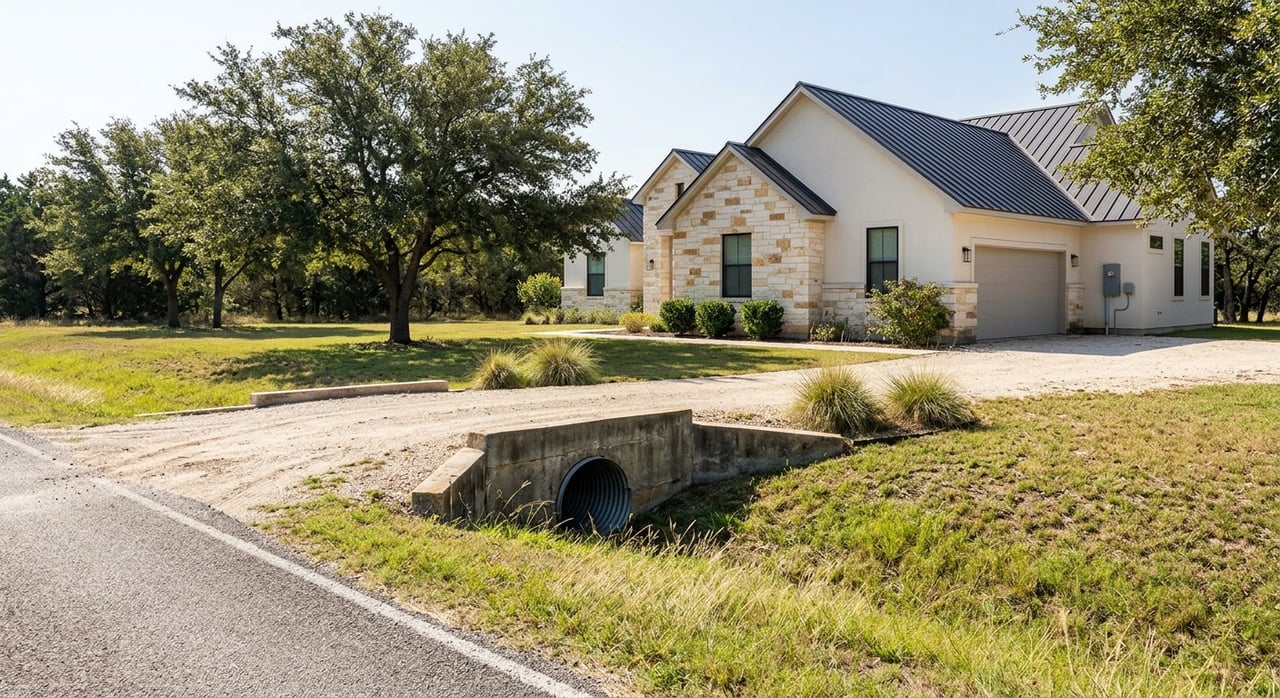
Without an HOA, you carry more day‑to‑day responsibility. Many rural parcels rely on private wells and septic systems. You will also handle your own fencing, driveway upkeep, and any shared private road maintenance per recorded agreements. Costs can be uneven — fewer fixed dues, but larger one‑time expenses if a well pump fails, a septic system needs repair, or a gravel road needs grading.
Buying near a small community like Telferner means confirming which local rules apply. Start with location, utilities, access, and flood risk. These factors affect budget, feasibility, insurance, and long‑term value.
Verify whether a property is inside Telferner’s city limits or in unincorporated Victoria County. City versus county can change permitting, utilities, and who maintains the road. Use the Victoria County Appraisal District for taxing entities, and contact city offices and the County Clerk for plats, deed restrictions, and recorded covenants.
Inside town or in developed subdivisions, you are more likely to find municipal water or sewer. Rural parcels often need a private well and on‑site sewage. Ask utility providers about availability and hookup costs before you budget. Confirm if roads are public and county maintained or private with shared owner responsibilities. If roads are private, review any recorded road maintenance agreement so you know how costs are split.
Check FEMA flood maps to see if a parcel lies in a flood zone. Flood designations can affect insurance costs and building rules. You can also ask local floodplain administrators about development standards and whether the property has a known flood history.
Standard title insurance is important for both HOA and non‑HOA purchases. Review exceptions for easements, recorded covenants, utility districts, and road agreements. In Texas, mineral rights can be separated from surface rights, so ask the title company whether minerals are reserved or conveyed and how any activity could affect surface use.
An HOA can bring predictability. You pay set dues, and the association handles common‑area landscaping, signage, and sometimes private roads, lighting, or amenities like ponds and playgrounds. Uniform standards can help protect neighborhood appearance, which may support resale. In contrast, non‑HOA ownership reduces fixed costs but shifts upkeep to you and can bring larger, unpredictable expenses for wells, septic, or drives. Financing can also differ. Lenders may evaluate HOA financial health in subdivisions, and in rural areas they may look closely at access, private road conditions, and well or septic documentation.
Use this list to request documents and ask targeted questions early in the process.
Choose an HOA if you want clear architectural standards, managed common areas, and predictable neighborhood appearance. You may trade some flexibility for community rules and recurring dues. Choose a non‑HOA or rural parcel if you value autonomy, space, and the option to add outbuildings or keep animals, and you are comfortable managing wells, septic, and access. In the Telferner area, both paths can work well. The key is aligning rules and responsibilities with how you plan to live on the property.
Your decision is easier when you see the full picture for a specific address. If you are comparing two homes — one in a subdivision and one on acreage — gather the documents in the checklist above and put costs on paper. Look at dues, recent assessments, road agreements, utility hookup fees, well and septic condition, and any restrictions that affect your plans.
Need help reading HOA budgets, vetting rural systems, or confirming city versus county requirements? Reach out to Molly Volek for local guidance and a clear, step‑by‑step plan.
Stay up to date on the latest real estate trends.



Get assistance in determining the current property value, crafting a competitive offer, writing and negotiating a contract, and much more. Contact me today.